Reishi Mushroom: Benefits, Dosage, Tea and Side Effects
 By Matthew Atkins ·
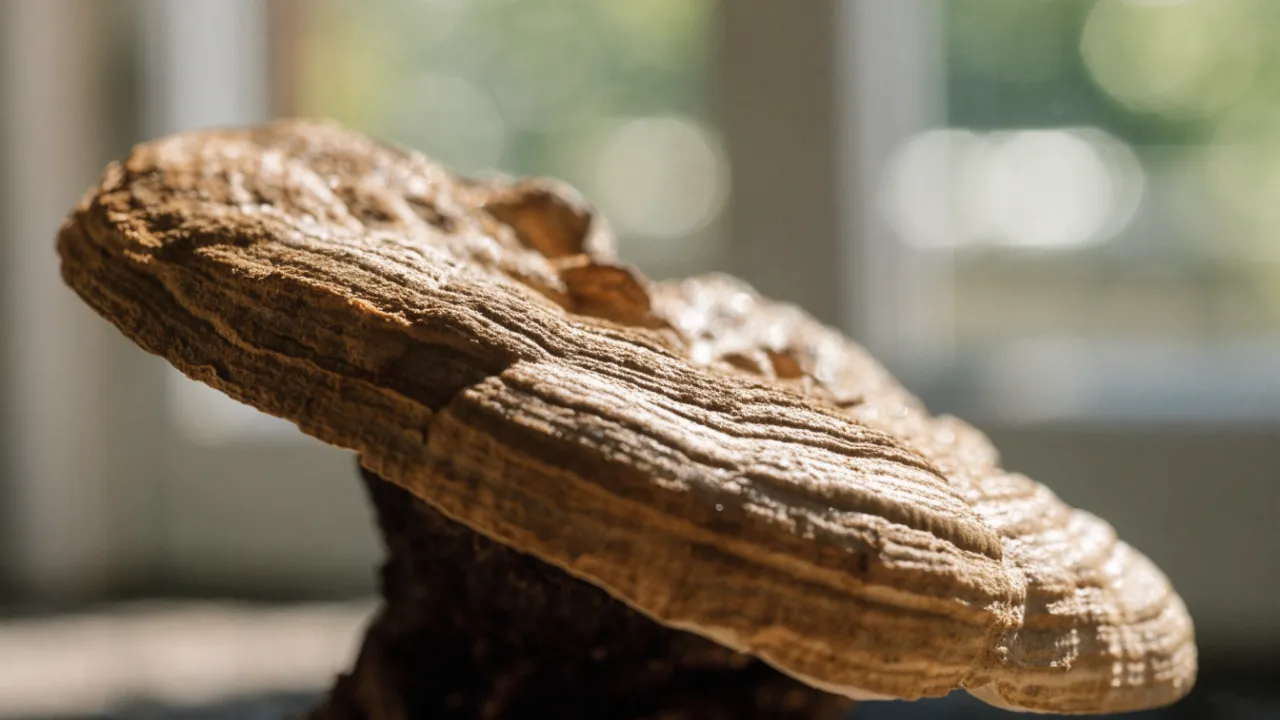
Reishi mushroom (Ganoderma lucidum) is a tough, shelf-like fungus that grows on hardwood trees. It has been used in Chinese and other East Asian medicine for around 2,000 years. Its two main groups of active compounds, beta-glucans and triterpenes, are being studied for their effects on the immune system, stress, sleep, fatigue, and the liver. Most people take it as a dual extract, a tea, or in capsules. For other species, see our guide to medicinal mushrooms.
Table of Contents
What Is Reishi Mushroom?
Reishi is the common English name for Ganoderma lucidum, a member of the polypore family of fungi. Polypores release their spores through tiny pores on the underside of the cap instead of through gills. The name Ganoderma comes from Greek words meaning “shining skin,” and lucidum is Latin for “bright” or “shining.” In Chinese it is called lingzhi, and in Japanese, reishi.
In the wild, reishi grows as a bracket or shelf that sticks out sideways from the trunks and stumps of dead or dying hardwood trees, especially oak, maple, elm, and plum. Its thread-like roots (mycelium) slowly break down the wood. It mostly lives on dead wood but can also attack weakened trees. It fruits most often in warm, humid weather, near the base of standing trees or on fallen logs.
How to Identify Reishi
Reishi is hard and woody, nothing like the soft mushrooms you cook with. Look for these features:
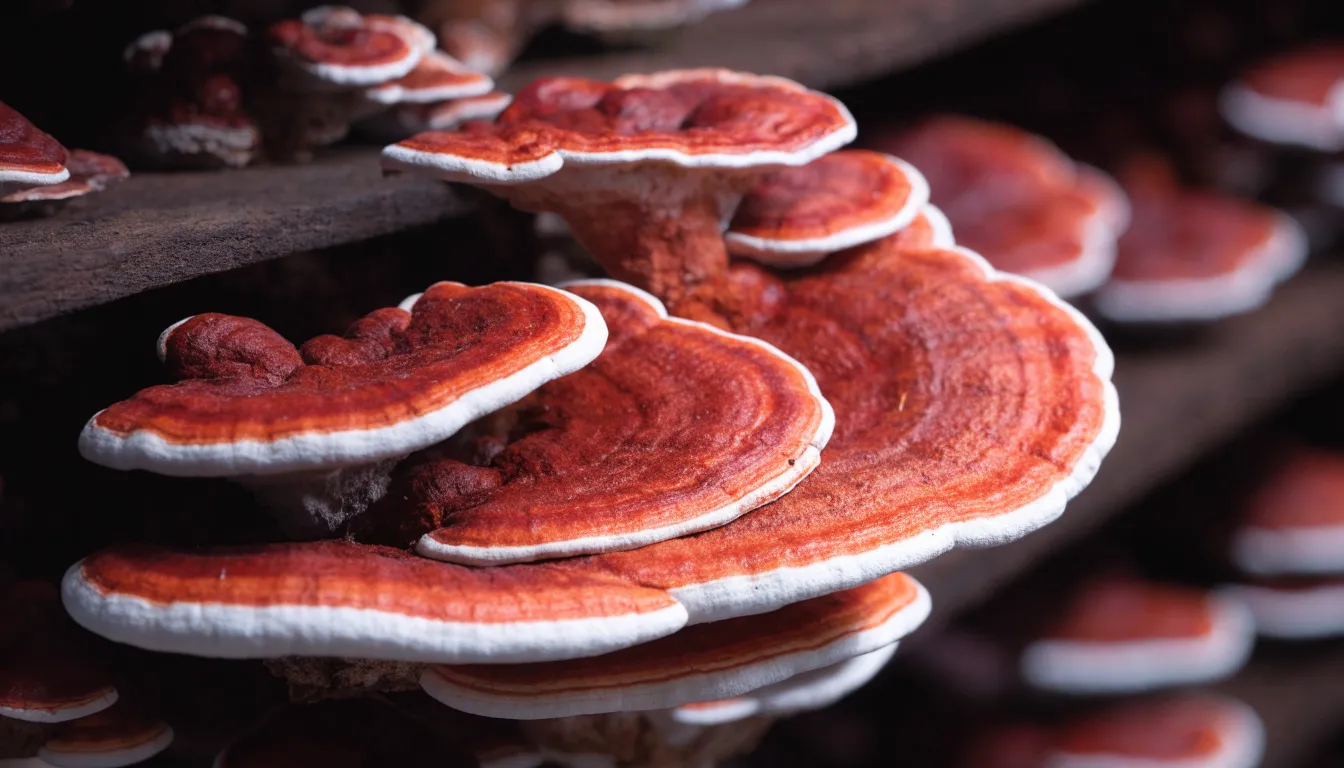
- Cap: Kidney-shaped to fan-shaped, 5 to 20 centimeters (2 to 8 inches) across. While it is still growing, the rounded edge stays a lighter orange or white.
- Surface: A glossy, varnished-looking crust, as if it had been painted with shellac. The color ranges from reddish-brown or mahogany to nearly black.
- Underside: Tiny white or cream pores instead of gills. They bruise brown when touched, and the spore print is brown.
- Stem and flesh: A stem that comes off the side of the cap (some have no stem at all), with the same varnished finish. The inside is tough and corky, so it can’t be eaten whole and must be simmered or extracted.
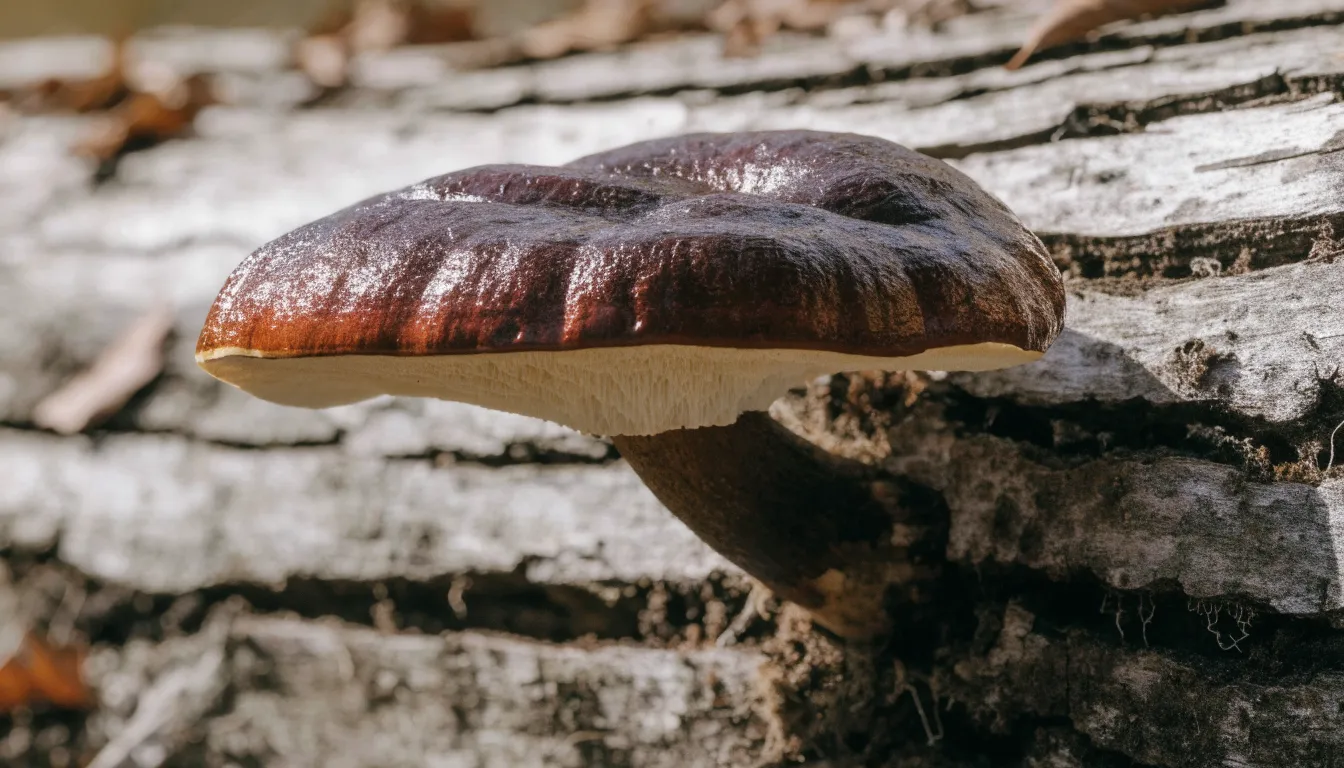
Foragers should watch for lookalikes. Other Ganoderma species look similar but differ in size, host tree, and spore size under a microscope. Several other brown shelf fungi also grow on wood, though they lack reishi’s lacquered shine. Always check wild finds against a local field guide or with an experienced forager, and never take a mushroom based on one matching feature.
Beta-Glucans and Triterpenes
Most of reishi’s effects are linked to two groups of compounds: beta-glucans and triterpenes.
Beta-glucans are long sugar chains found in the mushroom’s cell walls. When you swallow them, they attach to receptors on immune cells in the gut. This wakes up several types of immune cells, including macrophages and natural killer (NK) cells, and helps balance the chemical signals (cytokines) those cells use to talk to each other.
Triterpenes, including a group called ganoderic acids, are what make reishi taste so bitter. Reishi is often called an adaptogen, meaning a substance thought to help the body cope with physical and emotional stress, partly by calming the body’s main stress-hormone system. You can read more about what adaptogens are and how they work. In lab studies, triterpenes also reduce inflammation and help protect liver cells from damage.
Together, these two groups appear to affect the immune system, the stress response, and organs like the liver.
History as the “Mushroom of Immortality” in Asian Medicine
Reishi has long been called the “Mushroom of Immortality.” In Traditional Chinese Medicine (TCM), the name lingzhi is often translated as “spirit plant” or “divine mushroom.” The oldest Chinese herbal, the Shennong Bencao Jing, placed it among the highest-ranked tonics: herbs taken to strengthen the body and extend life, not just to treat illness. Reishi is prized as a tonic alongside herbs like Korean ginseng, astragalus, and schisandra. Early Chinese doctors used it to boost energy, calm the mind, and support a long life. For more on this tradition, see our overview of Chinese herbs.
Because wild reishi was rare and grew deep in the forest, it became a status symbol. Emperors received it as tribute, and Chinese art often showed lingzhi with gods and figures of long life. When its use spread to Japan and Korea, it kept its reputation as a tonic for health, wisdom, and good luck.
Reishi Benefits
Modern research is starting to test the traditional claims about reishi. Human trials show promising results for immunity, fatigue, and some heart-health markers, but much of the evidence still comes from test tubes and animals. Human studies use very different products, doses, and groups of people, so they are hard to compare.
Immune Support
Reishi is best described as an immune balancer rather than a simple booster. When its beta-glucans attach to immune cells, those cells send out signals that organize a measured response.
Research points to two main effects on white blood cells:
- Natural killer (NK) cells: Reishi extracts can make NK cells more active, helping them find and destroy infected or abnormal cells.
- T cells and B cells: Reishi supports the growth and function of these cells, which learn to recognize germs and remember them for next time.
Lab research suggests reishi may work in both directions. Its beta-glucans tend to switch immune activity on, while its triterpenes calm excess inflammation. That balancing effect is why many people take it daily during the change of seasons or busy, stressful periods, often with immune herbs like astragalus.
Sleep
Reishi is traditionally used to calm the mind and help with restless sleep. Research points to two possible ways it might work:
- GABA: Animal studies suggest reishi may act on GABA, the brain’s main calming chemical messenger.
- Stress hormones: By calming the stress response, reishi may help lower the extra cortisol that can keep you awake.
In studies on rats and mice, reishi extracts increased total sleep time and deep sleep. Good human sleep trials are still lacking, so these effects have not been proven in people. For sleep herbs with more research behind them, see chamomile, kava kava, and skullcap.
Stress, Anxiety and Mood
Long-term stress can throw off your stress hormones, leading to mood swings, tension, and trouble relaxing. Reishi is traditionally used to calm a racing mind without making you heavily drowsy.
The evidence is still early:
- In the fatigue trial described in the Fatigue section below, people taking reishi reported better well-being than those taking a placebo.
- Animal research suggests reishi triterpenes may reduce anxious behavior, possibly by supporting a protein that keeps brain cells healthy (BDNF) and by lowering inflammation in the brain.
Human trials focused on anxiety are scarce. Adaptogens with more human stress research include ashwagandha, rhodiola rosea, and holy basil. See our rhodiola vs. ashwagandha comparison.
Fatigue
Researchers in China have tested reishi in people with neurasthenia, a condition marked by ongoing physical and mental exhaustion, irritability, and low energy. In a 2005 randomized, double-blind, placebo-controlled trial of 132 patients, those who took a reishi polysaccharide extract for eight weeks reported much less fatigue and better overall well-being than the placebo group.
Possible reasons include:
- Helping cells produce energy under stress.
- Keeping cortisol from staying high for long stretches.
- Improving blood flow and oxygen use.
The studies so far are fairly small, and benefits for ongoing tiredness usually build slowly over several weeks of daily use. If your fatigue is tied to long-term stress, you may also want to read about herbs for adrenal fatigue.
Blood Pressure and Cholesterol
Reishi may help the heart and blood vessels in several ways, though human evidence is limited:
- Blood pressure: In lab tests, reishi compounds block an enzyme (ACE) that narrows blood vessels. Common blood pressure drugs called ACE inhibitors work on the same enzyme. Animal studies show lower blood pressure, and early human trials point the same way, but larger studies are needed.
- Cholesterol: Reishi’s fiber-like beta-glucans may reduce how much cholesterol the gut absorbs. In lab studies, some triterpenes also slow the liver enzyme that makes cholesterol, the same one statins target. Small human studies show small or mixed changes in total and LDL (“bad”) cholesterol.
- Circulation: Reishi’s antioxidants help protect fats in the blood from damage in lab tests. Other compounds may make blood platelets less sticky. That is also why reishi is a concern before surgery.
Liver Health
Your liver filters toxins all day, and that work creates damaging molecules called free radicals. In lab and animal studies, reishi extracts help protect the liver by boosting its natural antioxidant defenses, especially glutathione, one of the body’s main antioxidants.
Animal studies point to two other possible effects:
- Less scarring: Reishi compounds may slow the buildup of scar tissue (fibrosis) that follows long-term liver damage.
- Detox support: Reishi seems to affect the liver enzymes that break down toxins so the body can get rid of them.
These findings come almost entirely from animal and lab studies. High-dose reishi powder has also been linked to rare cases of liver injury (see Liver Safety). Reishi is not a treatment for liver disease. If liver support is your main goal, milk thistle has much more human research behind it. Anyone with a liver condition should talk to a doctor before using reishi.
Reishi and Cancer Research
Researchers have looked at reishi as an add-on to standard cancer treatment. In lab and animal studies, reishi extracts activate immune cells, slow tumor growth, block the new blood vessels tumors need to grow, and reduce the spread of some cancer cells.
Human evidence is much thinner. A 2016 Cochrane review of five randomized trials found that patients who took reishi along with chemotherapy or radiation were somewhat more likely to respond to treatment, and some reported a better quality of life. However, the trials were small and of low quality, and there is no evidence that reishi works on its own. At most, reishi may play a supporting role. It is never a replacement for standard care, and patients should talk to their cancer care team before taking it to avoid interactions with their treatment.
Other Claimed Benefits (Limited Evidence)
Several other uses have been studied mostly in lab dishes, animals, or small human trials with mixed results:
- Allergies: Lab and animal studies suggest reishi may reduce histamine release and allergic inflammation, but human trials are scarce.
- Gut health: Early research hints that reishi may feed helpful gut bacteria and strengthen the gut lining, but it is unclear how much this matters in practice.
- Blood sugar: Animal studies and a few small human studies suggest some extracts may improve blood sugar control, but results vary by product and dose.
- Brain protection: Early lab studies suggest reishi’s antioxidants may protect nerve cells from damage, but no large human trials have confirmed this.
Reishi vs. Other Medicinal Mushrooms
Reishi is mainly used as a calming, immune-balancing daily tonic. Other medicinal mushrooms target different parts of the body, and reishi is often combined with them in blends:
- Turkey tail: Studied mainly for gut and immune health.
- Maitake: Linked to blood sugar and metabolic health. See maitake mushroom benefits and uses.
- Shiitake: Used for general nutrition and immune support. Read more on shiitake mushroom health benefits.
Reishi vs. Chaga
Reishi is used mostly for stress and sleep, while chaga (Inonotus obliquus) is valued for its antioxidants and digestive support. Chaga is rich in melanin and polyphenols, which give it very high antioxidant scores in lab tests. It also has a long history of folk use for soothing the stomach and gut.
Reishi vs. Cordyceps
Reishi and cordyceps (usually Cordyceps militaris in supplements) sit at opposite ends of the energy spectrum. Reishi helps you wind down and is usually taken in the evening. Cordyceps is used for energy, oxygen use, and physical endurance, which makes it a popular morning or pre-workout supplement. Many people take cordyceps in the morning and reishi at night.
Reishi vs. Lion’s Mane
Reishi works broadly on immunity and stress, while lion’s mane focuses on the brain and nerves. Lion’s mane contains compounds (hericenones and erinacines) studied for their ability to boost nerve growth factor (NGF), a protein that helps nerve cells grow and repair themselves. People usually choose lion’s mane for memory and focus, or pair it with reishi to combine a clear head with stress relief.
How to Use Reishi
Reishi comes as capsules, tablets, powders, liquid tinctures (taken under the tongue or in water), and dried slices. Some people take it every day without a break, while others take a short break every few weeks. Keeping a simple log of how you feel during the first few weeks can help you settle on the best form and routine.
Fruiting Body vs. Mycelium Products
Reishi supplements are made from either the fruiting body or the mycelium:
- Fruiting body: The visible cap and stem of the mature mushroom. This is where most of the beta-glucans and triterpenes are found, and fruiting body extracts are made almost entirely from mushroom.
- Mycelium: The root-like network of the fungus, usually grown on grain such as rice, oats, or millet. Unless the maker separates the mycelium from the grain, the whole mass is dried and ground together. The result is a powder that is mostly grain starch, with little beta-glucan.
Fruiting body extracts are usually the better choice. Avoid products that list grain as an ingredient or show high starch and low beta-glucan numbers.
Dual Extracts, Powders and Capsules
Reishi’s cell walls are made of chitin, the same tough material found in crab and shrimp shells. Your gut can’t break chitin down well, so most of the useful compounds in plain ground reishi powder stay locked inside.
To get both main groups of compounds out, makers use a two-step process called dual extraction:
- Hot water extraction: Long simmering breaks down the chitin and releases the water-soluble beta-glucans.
- Alcohol extraction: Alcohol pulls out the bitter triterpenes, which water can’t capture.
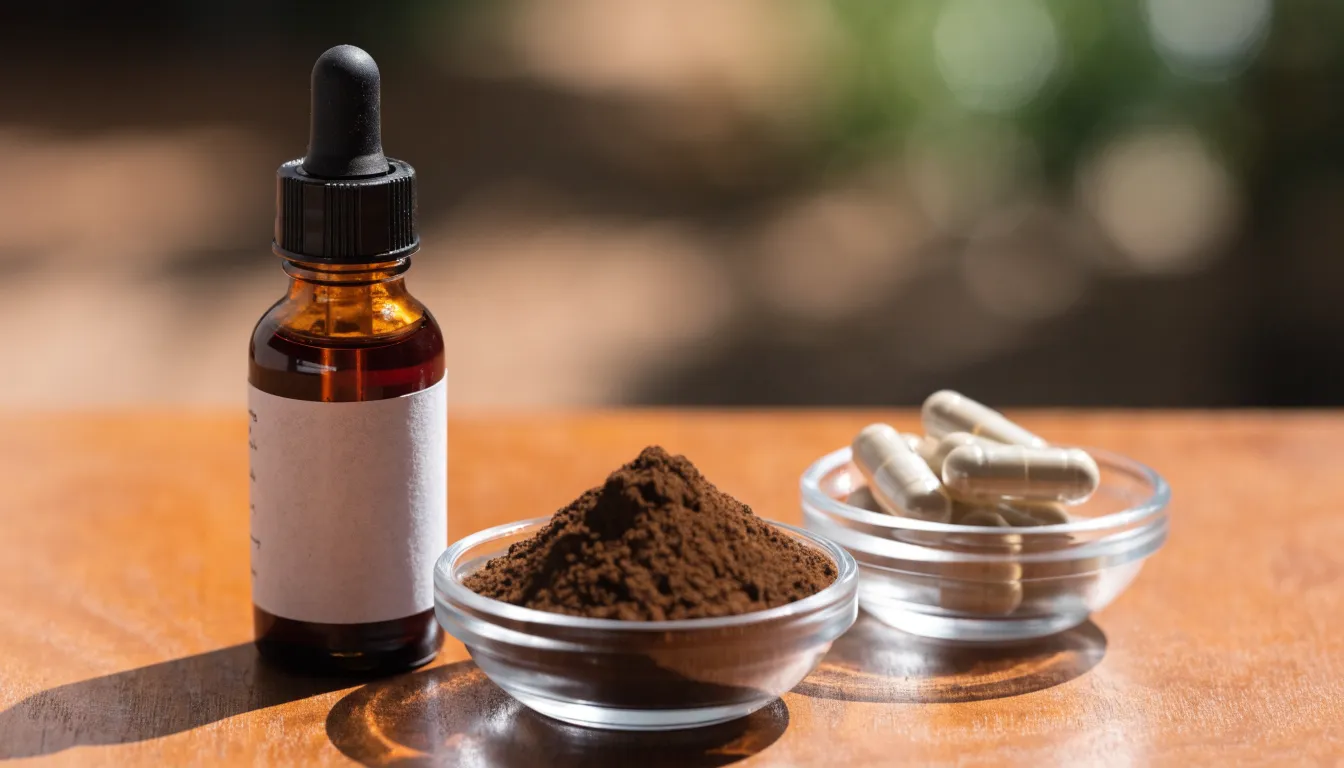
Water-only extracts miss most of the triterpenes, and alcohol-only tinctures miss most of the beta-glucans. When buying capsules or extract powders, look for fruiting body dual extracts that list the percentage of both beta-glucans and triterpenes on the label.
How to Make Reishi Tea
Dried reishi slices are hard and woody, so they need a long simmer to release their compounds:
- Measure and rinse: Use 3 to 5 grams of dried slices (about a small handful) per serving. Give them a quick rinse under cool water to remove dust.
- Simmer: Put the slices in a saucepan with 4 cups of cold water per serving. Much of the water will boil off. Bring to a boil, then turn the heat down to a low, steady simmer. Partly cover with a lid and simmer for 45 to 60 minutes, until the liquid turns deep amber or reddish-brown.
- Strain and serve: Take the pan off the heat, let it cool for a few minutes, and pour through a fine strainer.
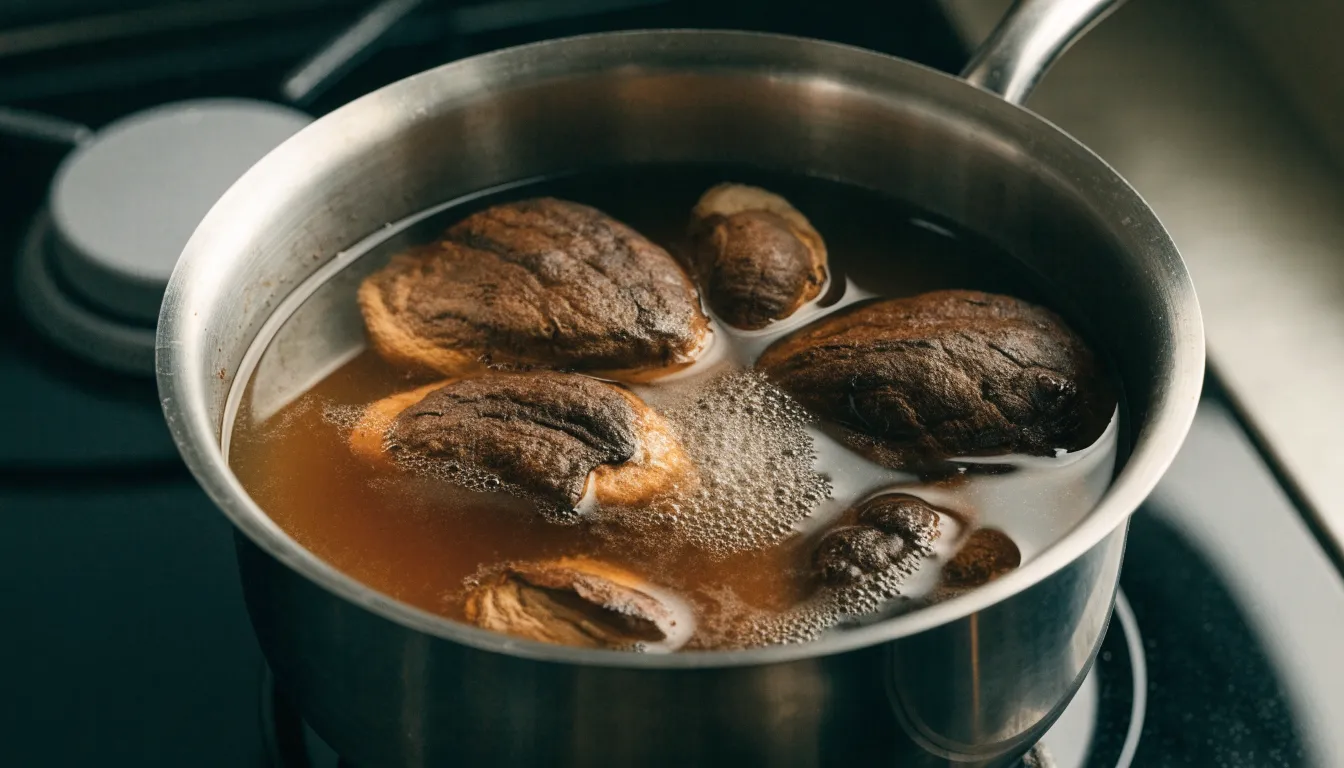
The tea is bitter and earthy. You can drink it plain or soften the taste with honey, fresh ginger, or lemon. Leftover tea keeps in the fridge for up to three days, and you can simmer the used slices a second time before composting them. Reishi is often simmered with other tonic roots using the same long-simmer method shown in how to make ginseng tea.
Reishi Coffee, Smoothies and Soups
Mixing reishi into food and drinks is an easy way to hide its bitterness:
- Coffee and lattes: Stir a measured dose of reishi powder or strong reishi tea into black coffee, or make a latte with frothed milk, cacao powder, cinnamon, or vanilla.
- Smoothies: Blend a measured dose of reishi extract powder with sweet, rich ingredients like ripe bananas, blueberries or bilberries, nut butter, and raw cacao.
- Soups and broths: Add reishi to bone broth, miso, chicken broth, or vegetable soup. Savory flavors and herbs like thyme and garlic, along with root vegetables, help cover its woody taste.

Reishi Dosage
Start at the low end of the range to see how you react before taking more. Doses vary by form:
- Dried slices or plain ground mushroom: 3 to 15 grams a day, split into smaller doses and simmered into tea rather than swallowed dry.
- Extract powders or capsules (hot-water or dual extracts): Usually 1 to 3 grams a day. Clinical studies have generally used 1.5 to 5 grams a day, split into two or three doses. Check the label for the concentration ratio (such as 10:1 or 20:1) and the beta-glucan percentage to judge strength.
- Liquid tinctures: 1 to 3 milliliters (about one to three droppers), one to three times a day, depending on the product’s strength.
Best Time of Day to Take It
Most people take reishi in the evening, about 30 to 60 minutes before bed, so its calming effect lines up with winding down. Some split their dose between late afternoon and bedtime. A few people find reishi slightly energizing instead, and they may do better taking it in the morning or early afternoon.
Side Effects and Safety
Reishi is generally well tolerated at moderate doses, and most people have no side effects.
Common Side Effects
A small number of people have mild reactions in the first days or weeks. These usually go away as the body adjusts or when the dose is lowered:
- Stomach trouble: Upset stomach, mild cramps, nausea, loose stools, or feeling overly full after meals.
- Dryness: Dry mouth, thirst, dry skin, or a scratchy throat (drinking more water usually helps).
- Dizziness: Occasional lightheadedness.
- Skin reactions: Mild redness, itching, or small rashes on the arms, chest, or face. Stop taking reishi and get medical help if you develop a spreading rash, hives, or swelling.
Liver Safety
Although reishi is studied for protecting the liver, a small number of case reports describe liver injury in people taking reishi powder. These range from raised liver enzymes to, rarely, severe hepatitis, often after high doses over long periods. Many of these cases also involved other factors, such as other medicines, existing liver problems, or supplements of unknown quality.
Mushrooms easily soak up substances from where they grow. Poorly made powders may contain heavy metals, pesticides, bacteria or mold, leftover extraction solvents, fillers, or even the wrong species. To lower your risk, don’t take very high doses on your own, choose third-party tested extracts over untested raw powders, and consider regular blood tests if you take strong extracts for months at a time. Stop taking reishi and see a doctor if you notice yellow skin or eyes, dark urine, or pain in the upper right side of your belly. If you take medicines that are processed by the liver, check with your doctor before starting reishi.
Bleeding Disorders and Surgery
Reishi may slightly slow blood clotting. For people with bleeding disorders, such as hemophilia, von Willebrand disease, or low platelet counts, this can mean longer bleeding from small cuts, more nosebleeds, and easier bruising. Get medical advice right away if you notice unusual nosebleeds or bruising while taking it.
For the same reason, stop taking reishi at least two weeks before any planned surgery, including tooth extractions and minor procedures. Always tell your surgeon and anesthesiologist that you’ve been taking it.
Drug Interactions
Talk to your doctor or pharmacist before combining reishi with any of these medicines:
- Blood thinners (e.g., warfarin, heparin, clopidogrel, daily aspirin): Reishi may add to their effect and raise the risk of bruising and bleeding. The same caution applies to other herbs that affect clotting, such as ginkgo biloba.
- Immunosuppressants (e.g., cyclosporine, tacrolimus): Reishi activates immune cells, so it may work against drugs used to prevent organ transplant rejection or to manage autoimmune diseases.
- Blood pressure medicines: Together with reishi, these may lower blood pressure too far and cause dizziness or fainting.
- Diabetes medicines (e.g., insulin, metformin, other blood sugar pills): Reishi may lower blood sugar, so taking both could raise the risk of low blood sugar. Check your levels closely.
- Drugs that need exact blood levels: If a medicine needs careful dosing or regular blood tests, ask your pharmacist or doctor before adding reishi.
Pregnancy and Breastfeeding
No good studies have tested reishi in pregnant or breastfeeding women, so its effects on an unborn baby or on breast milk are unknown. Most herbal references advise avoiding reishi during pregnancy and breastfeeding.
Who Should Avoid Reishi
Besides pregnant or breastfeeding women, people with bleeding disorders, and anyone within two weeks of surgery, the following people should avoid reishi or use it only with a doctor’s guidance:
- People with low blood pressure: Reishi may lower blood pressure further and cause lightheadedness or fainting.
- People with autoimmune conditions: In conditions such as rheumatoid arthritis, lupus, or multiple sclerosis, reishi’s immune effects could in theory make an overactive immune system worse.
- People with liver disease: Because of the rare reports of liver injury, use reishi only with a doctor’s guidance.
How to Buy Quality Reishi
Because mushrooms soak up whatever is in their environment, judge brands on these four points:
- Third-party testing: Look for brands that publish a Certificate of Analysis (COA) for each batch from an independent lab. It should confirm the species and the measured beta-glucan and triterpene levels.
- Heavy metal testing: Mushrooms readily absorb lead, cadmium, arsenic, and mercury from soil and wood. Make sure every batch is tested for these metals, and for bacteria and mold, against recognized safety limits.
- Clear sourcing: The label should say which part of the mushroom is used (fruiting body, mycelium, or spores), how it was grown (outdoors on hardwood logs or indoors), and how it was dried and extracted.
- Organic certification: A recognized organic seal means the mushroom was grown without synthetic pesticides or fertilizers.
How to Grow Reishi at Home
To grow reishi at home, start by buying reishi spawn (mushroom “seed”) or a liquid culture. There are three main ways to grow it, depending on your space and equipment:
- Sawdust blocks: Mix hardwood sawdust (such as oak or maple) with a little bran, add water until it is damp but not dripping, and pack it into heat-safe grow bags with filter patches. Sterilize the bags in a pressure cooker and let them cool. Then add grain spawn in a clean, still-air box or in front of a flow hood. Keep the bags somewhere warm and dark for several weeks until they turn fully white. Then cut slits in the bags and move them to a humid fruiting chamber with fresh air.
- Grain jars: Add spawn to jars of sterilized grain and shake them to help it spread. You can use this grain to start sawdust blocks, or remove the lids and fruit small harvests straight from the jars inside a humid chamber.
- Outdoor hardwood logs: In late winter or early spring, drill holes along freshly cut oak or other hardwood logs, push in spawn plugs, and seal them with wax. Stack the logs in a shady, damp spot and water them during dry spells. Logs usually take a full season or more before they fruit, and they can keep producing for several years.
Reishi Mushroom FAQ
Is reishi the same as lingzhi? Yes. Lingzhi is the Chinese name and reishi is the Japanese name for the same mushroom. Most reishi sold in Asia is now known to be a closely related species, Ganoderma lingzhi, rather than the European G. lucidum, and other Ganoderma species are also sold under both names. Check the label for the Latin name.
Can you take reishi every day? Reishi is traditionally taken daily for weeks or months, and there is no known tolerance buildup. Some traditional routines suggest a short break every few weeks to check how you feel. Talk to a doctor before long-term high-dose use because of the rare liver case reports.
Why is reishi so bitter, and how can I avoid the taste? The bitterness comes from its triterpenes (such as ganoderic acids). If you don’t like it in tea, coffee, smoothies, or broth, try capsules or tablets instead.
How quickly does reishi work? Reishi is a slow-acting tonic, not a quick stimulant or sleep aid. Some people notice they feel a bit more relaxed in the evening within days, but benefits for fatigue, stress, and immunity usually take several weeks of daily use.
What is the shelf life of reishi supplements? Dried slices and sealed extracts keep for a long time in a cool, dark, dry place. Once opened, keep powders and tinctures away from heat, light, and moisture, and use them by the date on the label.
Can I take reishi with other adaptogens? Yes. Reishi is often combined with other mushrooms and adaptogens, such as cordyceps, lion’s mane, or ashwagandha. Start one new supplement at a time so you can tell which one is causing any effects. See our full list of herbs by health condition for other options.
Matthew Atkins
Matthew studied biology and has worked in conservation. He's been interested in medicinal herbs for many years. More about HerbsList
This page is for general information only and isn't medical advice. Talk with a doctor or pharmacist before taking any herb or supplement. Full disclaimer